AEC Technology Updates Straight to Your Inbox
Thank you! Your submission has been received!
Oops! Something went wrong while submitting the form.
By subscribing, you agree to our Privacy Policy and consent to receive updates from our company.


.webp)
.svg)


March 13, 2026

2:53 pm

Buildings do not get made in one straight line. A project starts as an idea. Then it becomes a design. Then it turns into a real structure on site. After that, the building still needs to be managed for years.
That is why BIM matters.
BIM stands for Building Information Modeling. It helps teams plan and work more efficiently. Instead of everyone using separate drawings and files, BIM brings the building into a single shared digital model.
People often ask about the stages of BIM. They want to know what really happens at each step. They also want to understand how it works without getting bogged down in complex terms.
This guide breaks it down in simple language. It is written for homeowners, builders, facility teams, and anyone who wants a clear explanation. PlansRow is familiar with how BIM fits into real projects, so the examples here follow what engineers and project teams actually do.
BIM is not just a 3D picture of a building.
It is a digital model that holds information. That information can include sizes, materials, system routes, and equipment details. It helps teams see the same building in the same way.
In older workflows, each team often worked on separate drawings. That caused delays and mistakes. A pipe might hit a beam. A duct might block a ceiling space. People would only notice when fixing it is expensive.
BIM helps catch these issues earlier.
People ask how bim design works because they think it is only about making 3D views. But BIM is really about shared building data.
Here is the simple version of how it works:
The core idea of BIM design is this: you build the project in a digital space first, so fewer things go wrong when you build it for real.
Most projects follow four stages. These are the main stages of BIM:
Each stage has a clear purpose. One stage sets up the next.
If Stage 1 is weak, Stage 2 becomes messy.
If Stage 2 is rushed, Stage 3 becomes stressful.
If Stage 4 is ignored, the building becomes harder to maintain.
That is why the importance of BIM stages is not just theory. It affects time, cost, and quality.
This is where BIM begins.
At this point, the project is still being shaped. The team wants answers to basic questions:
The BIM model in Stage 1 is not highly detailed. It is used to map the building in a clean, simple way.
This stage often includes:
It helps teams test ideas without spending money on detailed work too early.
This stage also supports early cost thinking. Not perfect pricing. Just enough to avoid unrealistic plans.
This is where the model becomes “real.”
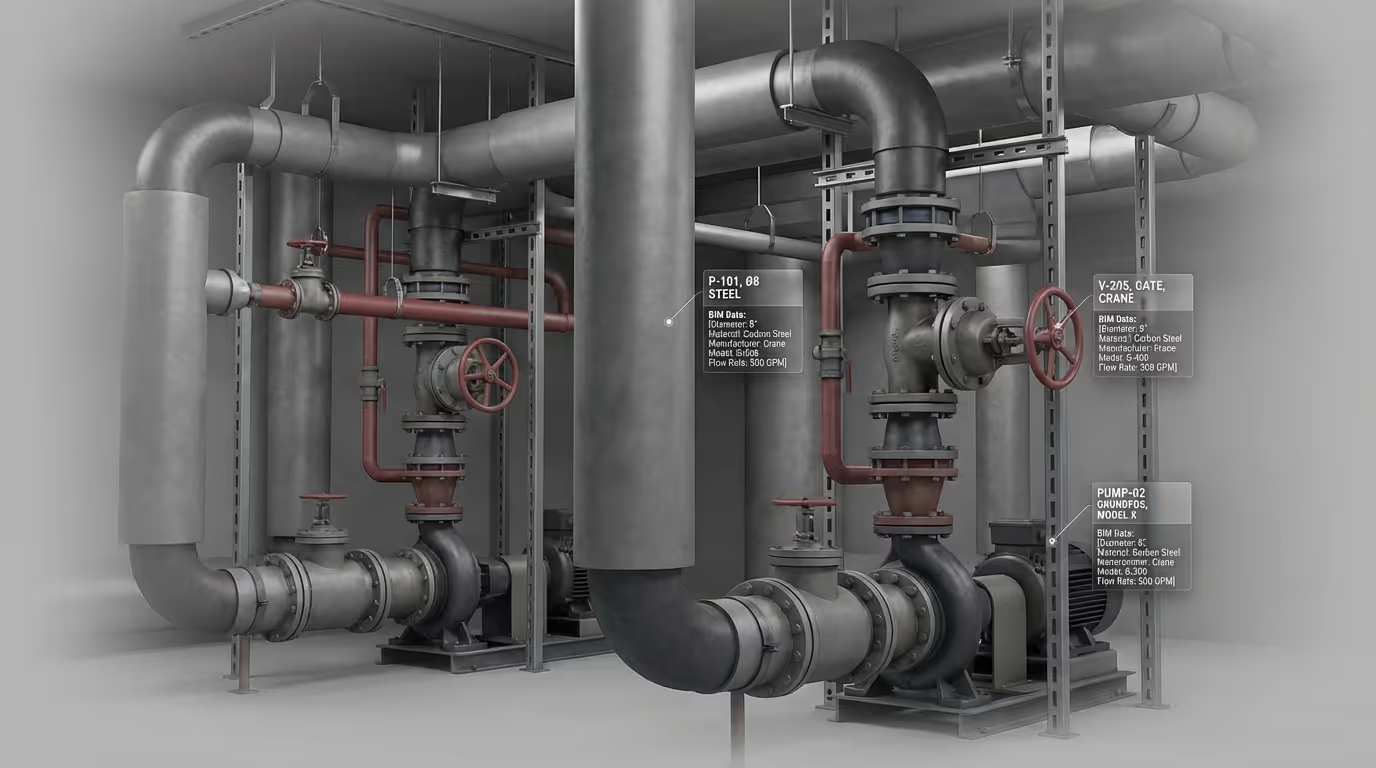
The project team starts adding real elements and real systems.
Here is what typically happens:
This is a big reason BIM is used.
A clash is when two things try to occupy the same space. For example:
With BIM, teams can spot these issues on a screen rather than on site.
This is where the benefits of following bim stages become clear. Coordination here can save weeks later.
This is where many people misunderstand BIM. They think BIM is only for designers. But BIM matters a lot once construction begins.
During construction, the model becomes a working tool.
This stage is also where real-world conditions test the plan. Something always changes.
A wall location may shift slightly.
A beam depth may be adjusted.
A system route may require a minor change due to site conditions.
A BIM workflow helps teams document these changes clearly. It avoids the “nobody told us” problem.
This is also where the importance of bim stages becomes obvious. If the design stage is poorly coordinated, construction becomes slower and more expensive.
BIM does not stop at handover.
This final stage is about the building’s life after construction. This matters because most building costs occur after construction is complete. Maintenance, repairs, and upgrades cost more over time than many people expect.
In Stage 4, the BIM model becomes a long-term reference.
This helps facility teams avoid guesswork.
Instead of searching for manuals and drawings, they can look up equipment details and locations in the model.
PlansRow understands how useful this stage becomes for owners who want better control over building upkeep.
The benefits of following bim stages are not just about “better design.” They show up in real project outcomes.
Here are the most common benefits:
BIM does not remove all problems. But it reduces avoidable ones.
The importance of bim stages is simple. Each stage reduces risk.
Here is what happens when stages are skipped:
In real projects, BIM works best when teams respect its stages and treat them as a system rather than a one-time file.
FAQs
1) What are the stages of BIM?
The stages of BIM are planning, detailed design and coordination, construction, and operation or facility management.
2) How does BIM design work for a beginner?
It works by creating one shared digital model. Different teams add their systems to the same model to keep everyone aligned.
3) What are the benefits of following the BIM stages?
The benefits of following bim stages include fewer clashes, smoother construction, better documentation, and easier maintenance after handover.
4) Why is the importance of bim stages so high?
Because each stage reduces risk, skipping stages usually leads to delays, confusion, and additional costs later.
5) Does BIM help after the building is finished?
Yes. In Stage 4, the model helps facility teams track equipment, plan maintenance, and manage upgrades.
6) Is BIM only for big projects?
No. Smaller projects can also benefit, especially when systems are tight or when accuracy matters.
BIM is a practical system that supports a building from idea to long-term use. The stages of BIM keep work organized, reduce confusion, and help teams make better decisions.
When you understand how bim design works, you see why BIM is more than 3D. Shared information helps designers, builders, and facility teams work from the same truth.
The benefits of following bim stages include fewer mistakes, better coordination, and smoother handovers. The importance of bim stages becomes clear when you see how problems are prevented before they turn into expensive site issues.
PlansRow is familiar with these workflows and how BIM stages support better project outcomes from start to finish.
By subscribing, you agree to our Privacy Policy and consent to receive updates from our company.
